
How We Test Mattresses

At Mattress Advisory, we do not believe a mattress should earn a recommendation based only on brand claims, marketing language, or one person’s first impression.

A mattress may feel comfortable for a few minutes in one position, but that does not always mean it will work well for different body types, sleep positions, couples, temperature regulation, different bases, or long-term use.

That is why we created the Mattress Advisory Fit-Reliability Testing Protocol, or FRTP.

Our Fit-Reliability Testing Protocol is a hands-on mattress testing system designed to answer one practical question:

Who is this mattress actually right for?

To answer that, we test mattresses across pressure relief, body support, motion transfer, cooling, edge support, responsiveness, base compatibility, durability indicators, and real sleeper feedback. We also use testers with different body weights and sleep preferences because mattress comfort is personal. A mattress that works well for one sleeper may not work well for another.

Our goal is not just to tell you whether a mattress is “good.” Our goal is to show you where it performs well, where it falls short, and who should actually consider buying it. Learn more about Mattress Advisory, our review philosophy, and the team behind our mattress testing process.

Readers who are unsure which construction, firmness, or sleep-position fit is right for them can also use our mattress quiz for personalized guidance.
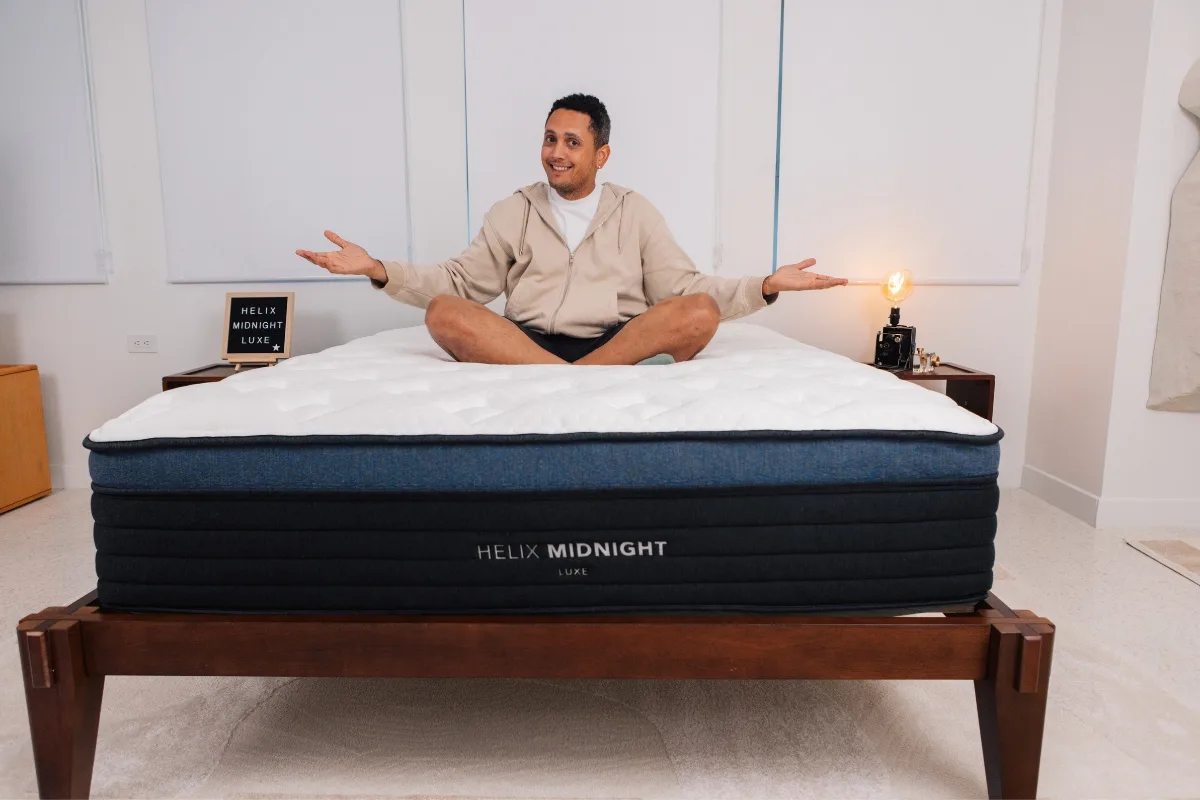
Mattress Advisory tester seated on a Helix Midnight Luxe during hands-on mattress evaluation.

Fit-Reliability Testing Protocol

The Mattress Advisory Fit-Reliability Testing Protocol is our internal mattress review process. Most of this test take place in our testing studio, where we can examine mattresses under repeatable conditions.

It combines:

  • Controlled studio analysis
  • Pressure map testing
  • Motion transfer testing
  • Heat retention testing
  • Edge support testing
  • Responsiveness and bounce testing
  • Adjustable base testing
  • Slatted base testing
  • Body strain testing
  • Multiple sleeping positions testing
  • Multiple body weight testing
  • Material build analysis

Most mattress reviews focus on whether a bed feels soft, firm, comfortable, or supportive. We go further by testing how reliably a mattress performs across real-life sleeping conditions. We also film many of these tests and publish the results in video reviews on our YouTube channel.

That includes how the mattress performs for side sleepers, back sleepers, stomach sleepers, combination sleepers, couples, light sleepers, average weight sleepers, heavy sleepers, hot sleepers, cold sleepers, and people using different foundation types.

We call this fit reliability.
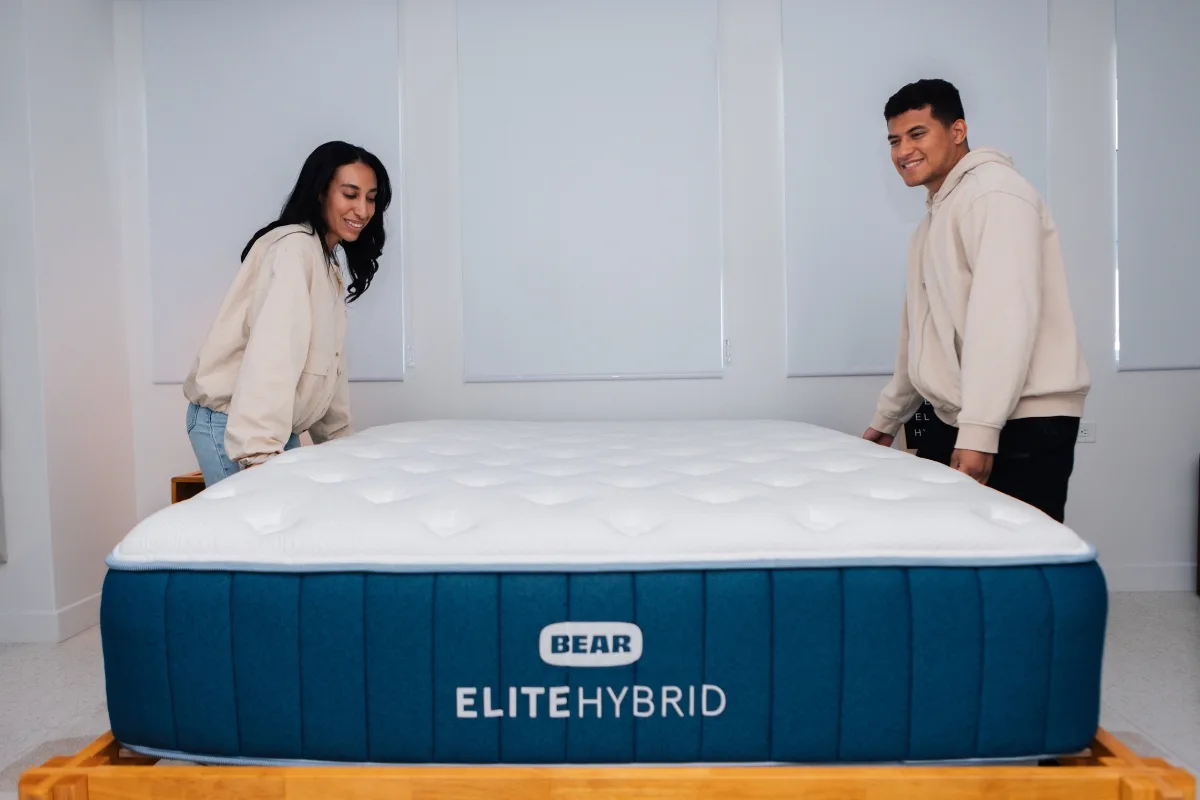
Mattress Advisory testers positioning a Bear Elite Hybrid mattress in our testing studio.
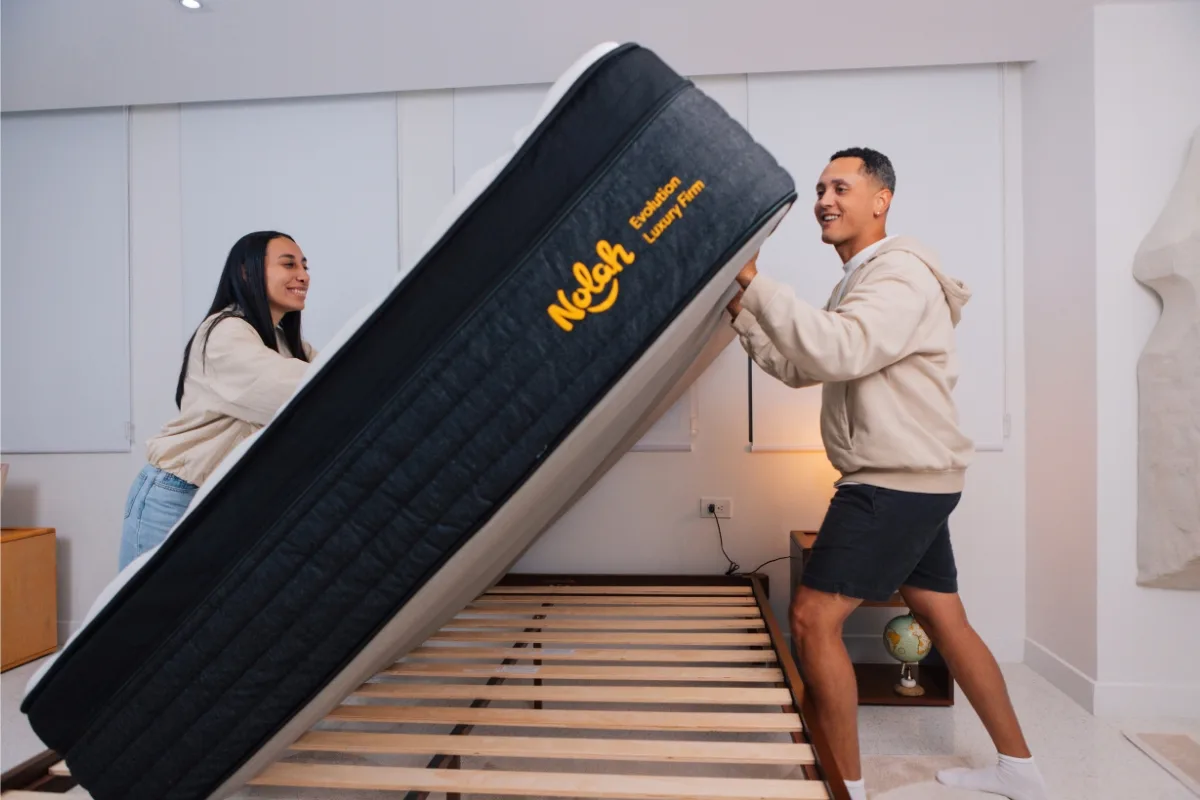
Mattress Advisory testers placing a Nolah Evolution 15 mattress on a slatted foundation for compatibility testing.

What Fit Reliability Means

Fit reliability measures how consistently a mattress performs across different sleepers and real-world use cases.

A mattress has strong fit reliability when it performs well across:

  • Different body weights
  • Different sleeping positions
  • Different foundation types
  • Movement disturbances
  • Temperature changes
  • Pressure points
  • Support factor
  • Edge use
  • Break-in and durability

A mattress has weak fit reliability when it only works for a narrow type of sleeper or performs well in one test but poorly in others.

For example, a mattress may provide excellent pressure relief for lightweight side sleepers but allow too much hip sinkage for heavier stomach sleepers. Another mattress may isolate motion well but trap too much heat for hot sleepers. Another may feel supportive on a platform base but lose support on a slatted base.

Our testing process is designed to identify these differences clearly and use them to inform the recommendations in our mattress guides.

Our Mattress Testing Categories

Understanding mattress materials and construction can make these test results easier to interpret. Our mattress education resources cover everything from mattress types and firmness to support, pressure relief, and other important fundamentals. Our sleep education resources explain the factors that can influence sleep comfort and mattress fit.

Every mattress we review is evaluated across the following major performance areas:

Testing Category What We Measure
Body Fit How well the mattress supports different body types and sleeping positions
Pressure Relief How well the mattress reduces pressure around the shoulders, hips, back, and sensitive areas
Motion Isolation How much movement travels across the mattress when one person moves
Temperature Regulation How much heat the mattress holds and how quickly it cools back down
Edge Support How stable the mattress feels along the perimeter
Responsiveness & Bounce How quickly the mattress responds when weight is removed and how easy it is to move around
Base Compatibility How the mattress performs on platform, slatted, and adjustable bases
Durability Indicators How the mattress responds to compression, impact, early break-in, and construction review
Value Index How the mattress performs compared to its price and similar competitors

These categories help us evaluate individual mattresses consistently in our mattress reviews and compare competing models more fairly in our mattress comparisons instead of relying only on personal opinions.

Our Testing Setup

To keep our testing consistent, each mattress is evaluated in our studio using a repeatable process.

Our testing setup may include:

Pressure Mapping

Medicina Ball Test

Timer Response Test

Liquid Motion Test

Partner Motion Test

Thermal Camera Test

Yardstick Edge Test

Platform Slat Test

Adjustable Base Test

Body Type Test

Material Build Test

Video Recording

Whenever possible, we test the same mattress across the same conditions so that our results can be compared fairly from one mattress to another.

Before testing begins, we inspect each mattress and document the setup process.

We look at:

  • Mattress size tested
  • Mattress height
  • Firmness option
  • Weight of the mattress
  • Expansion after unboxing
  • Off-gassing or odor
  • Cover feel and construction
  • Layer design
  • Foam, coil, latex, or hybrid construction
  • Edge reinforcement
  • Zoned support features
  • Stated materials and certifications
  • Warranty and return policy details
  • Foundation requirements

This first inspection helps us understand how the mattress is built before we begin performance testing.

We also check whether the mattress has fully expanded before running our main tests. If a mattress needs additional time to expand, we note that in the review.

Firmness is one of the first things shoppers want to know, but it is also one of the most misunderstood.

A mattress does not feel the same to every person. A lighter sleeper may experience a mattress as firmer because they do not sink as deeply into the comfort layers. A heavier sleeper may experience the same mattress as softer because they compress more of the mattress.

That is why we evaluate firmness using both studio testing and tester feedback.

We look at:

  • Initial feel
  • Surface softness
  • Deep support
  • Sinkage
  • Contouring
  • Pushback
  • Whether the mattress feels balanced, plush, firm, or uneven
  • How firmness changes by body weight
  • How firmness changes with time
  • How firmness changes by sleeping position

We use a 1–10 firmness scale, where 1 is extremely soft and 10 is extremely firm.

However, we do not treat firmness as a score by itself. Firmness is a fit factor. A firm mattress is not automatically better or worse than a soft mattress. What matters is whether that firmness level works for the sleeper’s body type and sleep position.

Pressure relief is one of the most important parts of mattress comfort, especially for side sleepers and people who feel pressure around the shoulders, hips, or lower back.

To measure pressure relief, we use a pressure mapping pad that shows where pressure builds up while a tester lies on the mattress.

We test pressure relief in multiple sleeping positions, including:

  • Side sleeping
  • Back sleeping
  • Stomach sleeping when applicable
  • Edge-side sleeping when relevant

During pressure mapping, we look at:

  • Shoulder pressure
  • Hip pressure
  • Lower back pressure
  • Pressure distribution
  • High-pressure zones
  • Whether pressure changes by body weight
  • Whether pressure changes with time
  • Whether pressure changes by position

The pressure map helps us see whether the mattress is spreading body weight evenly or creating pressure points.

We combine the pressure map data with real tester feedback because a pressure image alone does not tell the full story. A mattress may show low pressure but still feel unsupportive, or it may show moderate pressure but feel comfortable to a specific sleeper.

Our reviews use both data and human feedback to explain what the pressure results actually mean.

This is one of the most important parts of the Mattress Advisory Fit-Reliability Testing Protocol.

We do not only ask whether a mattress feels comfortable at first. We also look at whether the mattress helps keep the body supported over time.

Our testers evaluate each mattress in the major sleeping positions:

  • Side sleeping
  • Back sleeping
  • Stomach sleeping
  • Combination sleeping

During these tests, we look for signs of poor fit, including:

  • Shoulder pressure
  • Hip pressure
  • Lower back strain
  • Hips sinking too deeply
  • Midsection hammocking
  • Spine feeling unsupported
  • Mattress feeling too firm under pressure points
  • Difficulty changing positions
  • Feeling stuck in the mattress
  • Feeling pushed out of alignment

We also ask testers to record body strain before and after sleep testing when applicable.

The areas we track may include:

  • Neck
  • Shoulders
  • Upper back
  • Mid back
  • Lower back
  • Hips
  • Knees
  • Overall stiffness

This helps us identify whether a mattress is likely to work well for a certain type of sleeper or whether it may create discomfort over time.

We do not make medical claims or promise that a mattress will fix pain. Instead, we describe how the mattress performed in our support, pressure, and body strain evaluations.

Motion transfer is especially important for couples.

A mattress with poor motion isolation can cause one person to feel the other person moving, rolling over, getting in bed, or getting out of bed.

We test motion transfer in several ways.

Medicine Ball Motion Test

We use a medicine ball to create controlled impact on one side of the mattress. Then we observe how much movement travels across the surface.

This helps us evaluate how well the mattress absorbs impact.

We look at:

  • How much the mattress shakes
  • How far movement travels
  • How quickly the surface settles
  • Whether movement feels sharp or muted
  • Whether the mattress continues to ripple after impact
  • Whether movement travels to the base or not

Water Bottle Motion Test

We also use a water bottle or water glass test because it gives a clear visual representation of motion transfer.

When movement is created on one side of the mattress, we observe how much the water ripples, shakes, or tips.

This test is simple, but it helps show readers what motion transfer looks like in real life.

Couple Motion Transfer Test

We also test partner disturbance with real people.

One tester lies on one side of the mattress while another tester performs common movements, such as:

  • Rolling over
  • Changing positions
  • Getting into bed
  • Getting out of bed
  • Sitting on the edge
  • Standing up from the edge

The resting tester reports how much movement they felt.

This helps us understand whether a mattress is a good option for couples, light sleepers, or people with restless partners.

Cooling claims are common in the mattress industry, but not every “cooling mattress” sleeps cool in real life.

To evaluate temperature performance, we test how much heat a mattress retains and how quickly it releases that heat.

Our cooling and heat retention process may include:

  • Baseline surface temperature measurement
  • Temperature reading after a tester lies on the mattress
  • Follow-up readings after the tester gets up
  • Heat recovery tracking
  • Room temperature and humidity notes
  • Hot sleeper input when available

We look at:

  • How much the mattress heats up
  • Whether heat stays concentrated under the body
  • How quickly the mattress cools down
  • Whether the surface feels breathable
  • Whether air flows through the mattress
  • Whether the mattress feels warm, neutral, or cool over time

We do not judge cooling based only on materials or marketing terms. Gel foam, phase change material, perforated foam, breathable covers, latex, and coils can all affect temperature, but the real question is how the mattress performs during testing.

A mattress earns a strong cooling score only when the testing results and sleeper feedback support that claim.

Edge support measures how stable the mattress feels around the perimeter.

This matters for couples, heavier sleepers, people who sit on the edge of the bed, and anyone who wants to use the full mattress surface.

We test edge support by measuring and observing:

  • How much the edge compresses when sitting
  • How stable the edge feels when lying near it
  • Whether the tester feels like they may roll off
  • Whether the mattress slopes near the edge
  • Whether the edge rebounds after pressure is removed
  • How edge support changes with different body weights

We measure edge sinkage and compare it to the mattress height. This helps us understand not just how much the edge compresses, but how significant that compression is relative to the mattress design.

A mattress with strong edge support should feel stable when sitting, lying, and moving near the perimeter.

Your Content Goes Here

Responsiveness describes how quickly a mattress reacts when weight is applied or removed.

A highly responsive mattress usually makes it easier to move around, switch positions, and get out of bed. A slower-responding mattress may provide deeper contouring but can make some sleepers feel stuck.

We test responsiveness by applying weight to the mattress, removing it, and timing how quickly the surface returns to shape.

We also evaluate:

  • Bounce
  • Pushback
  • Ease of rolling over
  • Ease of getting in the bed
  • Ease of getting out of bed
  • Whether the mattress traps the body
  • Whether combination sleepers can move comfortably
  • Whether the mattress responds differently near the edge

We also use a jump and controlled impact test to observe short-term resilience, surface stability, and how the mattress handles repeated force.

This test is not used by itself to make long-term durability claims. Instead, it helps us evaluate bounce, stability, recovery, noise, and how the mattress behaves under sudden movement.

Some mattresses use zoned support systems designed to feel firmer or softer under different areas of the body.

When a mattress includes zoned support, we test whether those zones are noticeable and whether they help or hurt the sleep experience.

Our zoned support testing may include:

  • Lying in different positions
  • Pressure mapping
  • Walking or stepping across the mattress surface
  • Testing shoulder, lumbar, and hip zones
  • Comparing center support to shoulder and leg areas
  • Checking whether zones align with real body positioning

The goal is to determine whether the zoning improves support and pressure relief or whether it creates awkward firmness transitions.

Zoned support is not automatically good or bad. It depends on how well the zoning matches the sleeper’s body and position.

We also test mattresses on slatted bases because many shoppers use slats instead of a solid platform.

Slat spacing and support can affect how a mattress feels and performs.

During slatted base testing, we look at:

  • Slat spacing
  • Mattress sag between slats
  • Change in firmness
  • Change in support
  • Change in pressure relief
  • Change in edge performance
  • Whether the mattress holds its shape or not
  • Whether the mattress meets the brand’s foundation requirements

If a mattress is sensitive to slat spacing or performs noticeably better on a solid platform, we mention that in the review.

This helps shoppers avoid buying a mattress that may not perform well on their current bed frame.

Many people use mattresses on adjustable bases, but not every mattress performs well when elevated.

We test adjustable base compatibility by placing the mattress on an adjustable base and checking how it performs in multiple positions.

We may test:

  • Flat position
  • Head elevated
  • Lumbar support
  • Legs elevated
  • Zero-gravity position
  • Sitting-up position

During adjustable base testing, we look at:

  • Whether the mattress bends smoothly
  • Whether it lifts away from the base
  • Whether it creates gaps
  • Whether support changes when elevated
  • Whether pressure relief improves or worsens
  • Whether the mattress slides
  • Whether motion transfer changes
  • Whether the mattress remains comfortable in real use

A mattress that performs well on a platform base may not always perform as well on an adjustable base. This is why base compatibility is part of our testing protocol.

Long-term durability takes time to measure, but there are early signs that can help us evaluate how a mattress may hold up.

Our durability and break-in evaluation may include:

  • Construction review
  • Material transparency
  • Foam density when available
  • Coil design when available
  • Edge reinforcement
  • Cover quality
  • Early compression behavior
  • Response after repeated impact
  • Static compression recovery
  • Changes after initial use
  • Warranty sag threshold
  • Foundation restrictions

We may also retest certain performance areas after a break-in period.

These may include:

  • Firmness feel
  • Edge support
  • Pressure relief
  • Bounce height
  • Response time
  • Center sinkage
  • Heat retention
  • Body fit

We are careful not to claim that a short-term test proves a mattress will last for a specific number of years. Instead, we use these tests to identify early performance changes, construction strengths, and potential durability concerns.

Multiple Tester Body Weights

Mattress comfort changes depending on body weight.

How a mattress performs can depend on many things, including individual comfort needs.

That is why we test mattresses using people with different body types whenever possible.

Our tester categories may include:

Tester Type Weight Range What This Helps Us Understand
Lightweight sleeper Under 130 lb Surface firmness, pressure relief, and whether the mattress feels too firm
Average-weight sleeper 130–230 lb General comfort, support, and pressure relief for many sleepers
Heavier sleeper Over 230 lb Deep support, sinkage, edge stability, and durability concerns

This helps us avoid one-size-fits-all recommendations.

A mattress may receive a strong score for lightweight side sleepers but a lower score for heavier stomach sleepers. When that happens, we explain the difference clearly.

How We Score Mattresses

Mattress Advisory uses a weighted scoring system to evaluate mattress performance.

Our overall mattress score is based on the categories that matter most to real sleepers.

Category Weight
Body Fit & Support 30%
Pressure Relief 12%
Motion Isolation 12%
Cooling & Heat Retention 12%
Edge Support 10%
Responsiveness & Bounce 8%
Base Compatibility 8%
Durability & Break-In Indicators 8%
Total 100%

We give the most weight to body fit and support because a mattress should first and foremost support the sleeper properly.

A mattress can have excellent cooling, strong edge support, or great motion isolation, but if it does not support the right sleeper in the right position, it should not be treated as a top recommendation.

Fit Reliability Index

In addition to our overall score, we also consider a mattress’s Fit Reliability Index.

The Fit Reliability Index reflects how consistently a mattress performs across different body types, sleeping positions, and real-world setups.

A mattress with a high Fit Reliability Index is easier to recommend across a wider range of sleepers.

A mattress with a lower Fit Reliability Index may still be a good mattress, but only for a more specific type of sleeper.

For example:

  • A soft mattress may be excellent for lightweight side sleepers but not supportive enough for heavier stomach sleepers.
  • A firm mattress may be great for back sleepers but too firm for side sleepers with shoulder pressure.
  • A memory foam mattress may isolate motion well but feel too slow-moving for combination sleepers.
  • A latex mattress may offer better breathability and responsiveness but feel too bouncy or firm for sleepers who prefer deep contouring.
  • A hybrid mattress may provide strong bounce and support but transfer more movement for couples.
  • A mattress may perform well on a platform base but lose support on wide slats.

Our reviews are designed to explain these trade-offs clearly.

Mattress Advisory testers evaluating the comfort and motion response of a Helix Midnight Luxe mattress.

Why a Mattress May Not Be Recommended

Not every mattress we test earns a recommendation.

A mattress may be excluded from a guide or receive a lower recommendation if we find issues such as:

  • Poor pressure relief
  • Weak support
  • Excessive motion transfer
  • Heat retention
  • Weak edge support
  • Slow response
  • Difficulty changing positions
  • Poor adjustable base compatibility
  • Poor slatted base performance
  • Strong odor that does not fade normally
  • Early signs of sagging or compression
  • Poor value compared to similar mattresses

We believe a helpful mattress review should explain both strengths and weaknesses.

That is why our reviews include who should consider each mattress and who should avoid it.
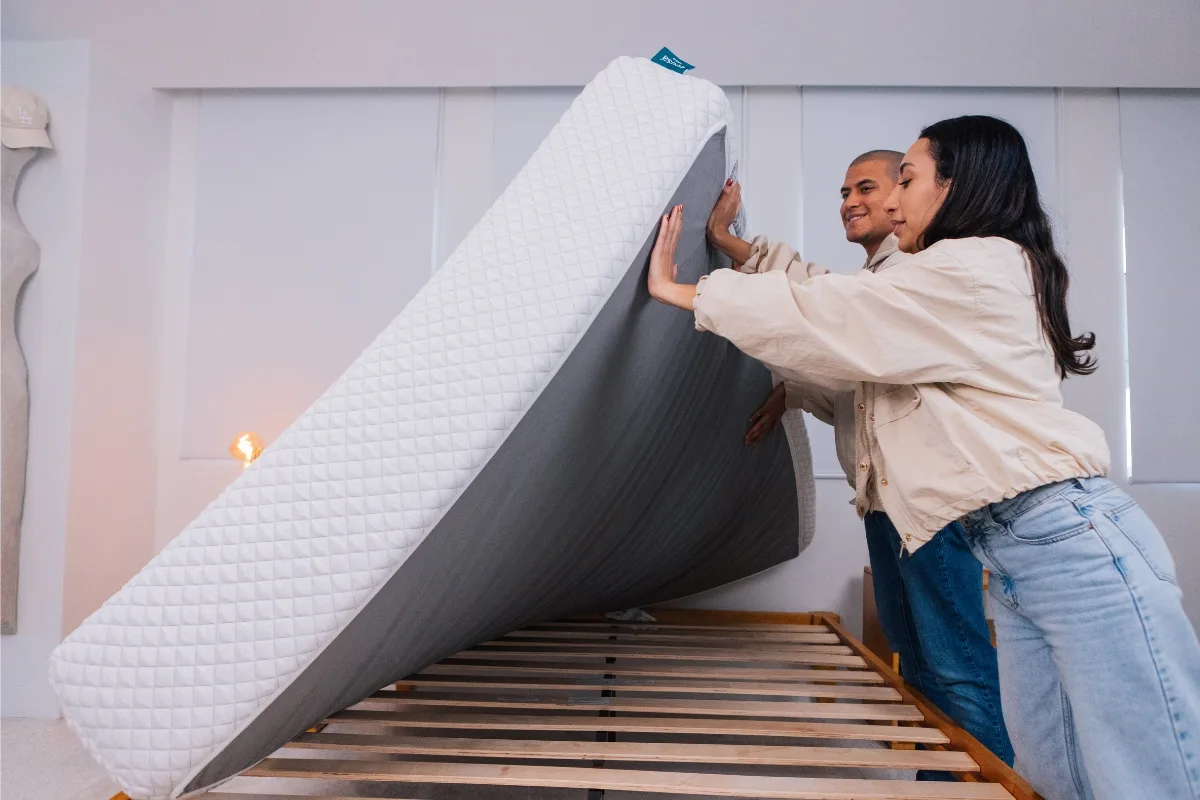
Mattress Advisory testers lifting a Leesa Sapira Hybrid Mattress to inspect its construction and foundation compatibility.
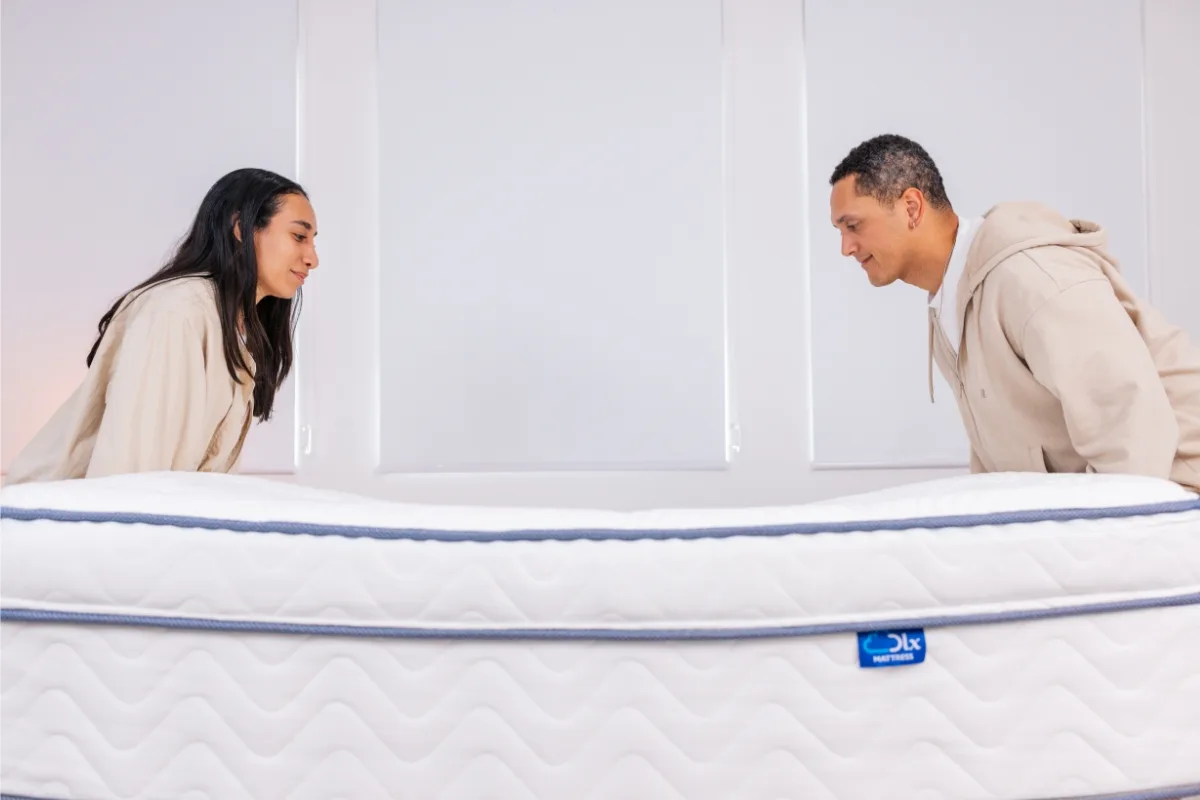
Mattress Advisory testers evaluating the edge support and surface stability of a DLX Premier Hybrid Mattress.

What We Publish in Our Reviews

When we review a mattress, we aim to show readers how we reached our conclusions.

Our mattress reviews may include:

  • Overall score
  • Fit reliability notes
  • Firmness rating
  • Pressure map results
  • Motion transfer results
  • Cooling test results
  • Edge support measurements
  • Responsiveness and bounce notes
  • Adjustable base performance
  • Slatted base performance
  • Tester body weight results
  • Sleeping position recommendations
  • Construction analysis
  • Pros and cons
  • Best-for and avoid-if sections
  • Value assessment

Whenever possible, we also include original photos, videos, measurements, and test observations from our studio.

Our goal is to make each recommendation clear, practical, and transparent.

How Mattresses Earn Spots in Our Buying Guides

A mattress does not earn a spot in our buying guides just because it is popular, heavily advertised, or available through an affiliate program.

To be recommended in a Mattress Advisory guide, a mattress must perform well for the specific category it is being considered for.

For example:

Best Mattress

What We Test For

  • Overall comfort and support
  • Pressure relief
  • Spinal alignment
  • Motion isolation
  • Cooling performance
  • Overall value
Read Our Full Guide

Best Mattress for Back Pain

What We Test For

  • Lumbar support
  • Spinal alignment
  • Hip sinkage control
  • Pressure relief
  • Support consistency
  • Ease of movement
Read Our Full Guide

Best Mattress for Side Sleepers

What We Test For

  • Shoulder pressure relief
  • Hip pressure relief
  • Side-sleeping alignment
  • Contouring around pressure points
  • Comfort across different body weights
  • Low strain in the shoulders and hips
Read Our Full Guide

Best Memory Foam Mattress

What We Test For

  • Body contouring
  • Pressure relief
  • Motion isolation
  • Foam responsiveness
  • Heat retention
  • Ease of movement
Read Our Full Guide

Best Hybrid Mattress

What We Test For

  • Coil support
  • Pressure relief
  • Responsiveness
  • Edge support
  • Motion isolation
  • Cooling and airflow
Read Our Full Guide

Best Mattress for Heavy People

What We Test For

  • Deep support
  • Spinal alignment under higher weight
  • Edge stability
  • Pressure relief under higher weight
  • Durability indicators
  • Temperature performance
Read Our Full Guide

Best Firm Mattress

What We Test For

  • Firmness consistency
  • Midsection support
  • Hip sinkage control
  • Spinal alignment
  • Surface stability
  • Ease of movement
Read Our Full Guide

Best King-Size Mattress

What We Test For

  • Consistent support across the surface
  • Motion isolation for couples
  • Edge support
  • Cooling across a larger sleep surface
  • Mattress stability
  • Overall value at the king-size price
Read Our Full Guide

Best Mattress in a Box

What We Test For

  • Expansion after unboxing
  • Off-gassing
  • Shape recovery
  • Support consistency
  • Edge recovery
  • Performance after full expansion
Read Our Full Guide

Best Affordable Mattress

What We Test For

  • Comfort for the price
  • Support for the price
  • Material quality
  • Durability indicators
  • Performance compared with similar-priced mattresses
  • Overall value
Read Our Full Guide

Best Cooling Mattress

What We Test For

  • Heat retention
  • Temperature recovery
  • Surface breathability
  • Airflow through the mattress
  • Hot-sleeper feedback
  • Cooling performance beyond marketing claims
Read Our Full Guide

Best Mattress for Stomach Sleepers

What We Test For

  • Midsection support
  • Hip sinkage control
  • Lower-back alignment
  • Firmness stability
  • Surface responsiveness
  • Ease of movement
Read Our Full Guide

Each buying guide uses the test results that matter most for that sleeper type, mattress construction, price point, or use case. A mattress may perform well overall but still not qualify for a specific guide if it does not meet the most important criteria for that category.

Brand-Provided Mattresses and Affiliate Disclosure

Some mattresses may be purchased by Mattress Advisory, and some may be provided by brands for testing.

When a mattress is provided by a brand, we do not allow that brand to control our testing process, scoring, opinions, rankings, or final review conclusions.

Mattress Advisory may earn a commission when readers purchase through links on our site. This does not change the price you pay and does not determine whether a mattress receives a positive review or earns a spot in our guides.

Our recommendations are based on our testing process, product research, and editorial judgment.

If a mattress performs poorly in our testing, we will say so.

Our Promise to Readers

Mattress shopping should be easier, clearer, and more honest.

Our promise is to give you mattress advice that is practical, transparent, and based on real testing.

  • No one-size-fits-all recommendations.
  • No rankings based only on marketing claims.
  • No confusing features treated like must-haves.
  • No mattress recommendations without explaining who they are actually for.

Just clear, hands-on mattress testing designed to help you find the right bed for your body, sleep style, comfort needs, and budget.

That is the purpose of the Mattress Advisory Fit-Reliability Testing Protocol.

Frequently Asked Questions

Mattress Advisory tests mattresses using a hands-on studio process called the Fit-Reliability Testing Protocol. We evaluate pressure relief, body support, firmness, motion transfer, cooling, edge support, responsiveness, base compatibility, durability indicators, and real sleeper feedback.

Our testing focuses on fit reliability. That means we look at how consistently a mattress performs across different body weights, sleeping positions, partner movement, foundation types, and real-world use cases. We do not judge a mattress only by first impressions.

Yes. Body weight can change how firm, soft, supportive, or pressure-relieving a mattress feels. That is why we test with different body types whenever possible.

No. We do not believe there is one perfect mattress for everyone. A mattress should be matched to your body type, sleep position, comfort preference, temperature needs, and foundation setup.

No. Brands do not control our testing process, scoring, rankings, or conclusions. Some mattresses may be provided for testing, and Mattress Advisory may earn affiliate commissions, but our recommendations are based on our testing and editorial judgment.