

Sleeping with a sunburn can be uncomfortable. The heat and pain from your skin can make it hard to relax or find a position that doesn’t hurt. Try simple things like taking a cool shower before bed or applying aloe vera or a light, fragrance-free moisturizer. Loose cotton clothes and soft sheets can help your skin breathe and prevent friction. Keeping your room cooler at night can also help you relax and sleep better.
If your burn feels severe, or if you see blisters or feel sharp pain, it’s best to check with a doctor. Taking care of your skin before bed helps it recover and gives you a better chance to sleep through the night.
Key Takeaways
- Cooling and moisturizing the skin can ease pain and irritation at night.
- A cool, calm sleeping space helps you rest more comfortably.
- Changing your sleep position can reduce pressure on sore areas.
- A cool and breathable mattress with gentle support helps soothe sunburned skin by reducing heat buildup and pressure, which makes it easier to rest while your body heals.

Understanding Why Sleeping With Sunburn Is Difficult

Sunburn changes how the body feels and reacts, which makes resting uncomfortable. As the skin becomes more sensitive, pain can increase. The heat and swelling that come with it can interrupt normal sleep, leaving the body restless and tired. These reactions work together to lower sleep quality and cause discomfort at night.
When skin is damaged by the sun, the body triggers an immune response. This brings redness, swelling, and warmth to the area. The skin becomes sore, and lying down can hurt. Even light fabric or bedding can sting. At the same time, the body’s temperature rises to support healing. This added warmth can interfere with the natural cooling process that helps people fall into deep sleep. Many end up waking several times through the night and feeling drained by morning.
Hydration is part of recovery, but drinking more water can mean more bathroom trips at night. These interruptions can stretch out the healing process since the body doesn’t get the full rest it needs.
Why Pain and Discomfort Intensify at Night
The sting of sunburn usually peaks hours after being in the sun, which is why it can feel worse by nighttime. The damage under the skin continues to develop, and as blood flow increases to repair the area, inflammation grows stronger. That extra heat and swelling can make the pain sharper.
At night, there are fewer distractions. This makes it easier to notice every small ache and itch. Lying still can also add pressure to sore areas, especially when the skin sticks to sheets or tight clothing. The trapped heat under blankets can make things worse. Since the body focuses on repair during sleep, inflammation becomes more active. That’s why the pain feels stronger at night, it’s a mix of healing and sensitivity happening at once.
How Inflammation Disrupts Rest
Inflammation is the body’s way of repairing itself after a sunburn. It widens blood vessels to send healing cells to the surface, but this process also releases chemicals that trigger pain. The result is skin that feels hot, tight, and itchy. These sensations keep the nervous system alert, making it harder to relax. The rise in body temperature also throws off the sleep cycle, shortening deep rest. Swollen skin can make it hard to move comfortably, so shifting positions brings little relief.
All of this adds up to restless nights and slower recovery. Managing inflammation and keeping the body cool can help ease pain and support better sleep. For more ways to handle it, see how to sleep with a sunburn.
Immediate Steps Before Bedtime for Sunburn Relief
To ease the pain of sunburn before bedtime, it’s important to cool the skin, apply soothing treatments, and stay well-hydrated. These steps calm irritation and help the body rest more comfortably, even when the skin feels sore or tight.
Cooling Down Your Skin Effectively
Cooling the skin helps calm the heat and redness that come with sunburn. A short, cool shower using water that’s just below body temperature works best. Stay away from ice or freezing water, it can shock the skin and make things worse. After showering, pat the skin dry with a soft towel. Don’t rub. You can also place a cool, damp towel from the fridge over the burned area for about 10–15 minutes. It gives gentle relief and helps the skin cool naturally.
Keeping your room cool, around 68°F, can make sleep easier. Use light cotton sheets that breathe well and don’t cling to your skin. A cooler environment helps prevent extra warmth that might keep you awake or make the burn sting more.
Applying Aloe Vera and Soothing Topicals
Aloe vera works well for sunburn because it cools and moisturizes the skin. Store-bought aloe gel or fresh aloe straight from the plant can be chilled and applied right after cooling down. It creates a light, refreshing layer that keeps the skin hydrated without feeling sticky.
Choose gentle, fragrance-free products that are meant for sensitive skin. Heavy creams or petroleum-based lotions can trap heat and cause more irritation. If needed, a small amount of hydrocortisone cream may help calm inflammation, but only for short use and as directed. The goal is to apply something light and soothing that doesn’t clog or heat up the skin. A thin layer helps reduce pain and keeps the skin from drying out overnight.
Hydration for Sunburn Recovery
Sunburn pulls moisture from deep in the body to the surface of the skin. That’s why it’s important to drink water throughout the evening and before bed. It helps your body heal and prevents dehydration.
Staying hydrated can reduce dryness, tightness, and itchiness that make it hard to sleep. If you’re feeling dizzy or have a severe burn, an electrolyte drink can also help restore balance. Regular fluid intake supports skin recovery and reduces inflammation. It’s one of the simplest ways to rest better and help your body heal while dealing with sunburn. For more on this approach, see tips for how to sleep with a sunburn.

Optimizing Your Bedroom for Comfort and Healing
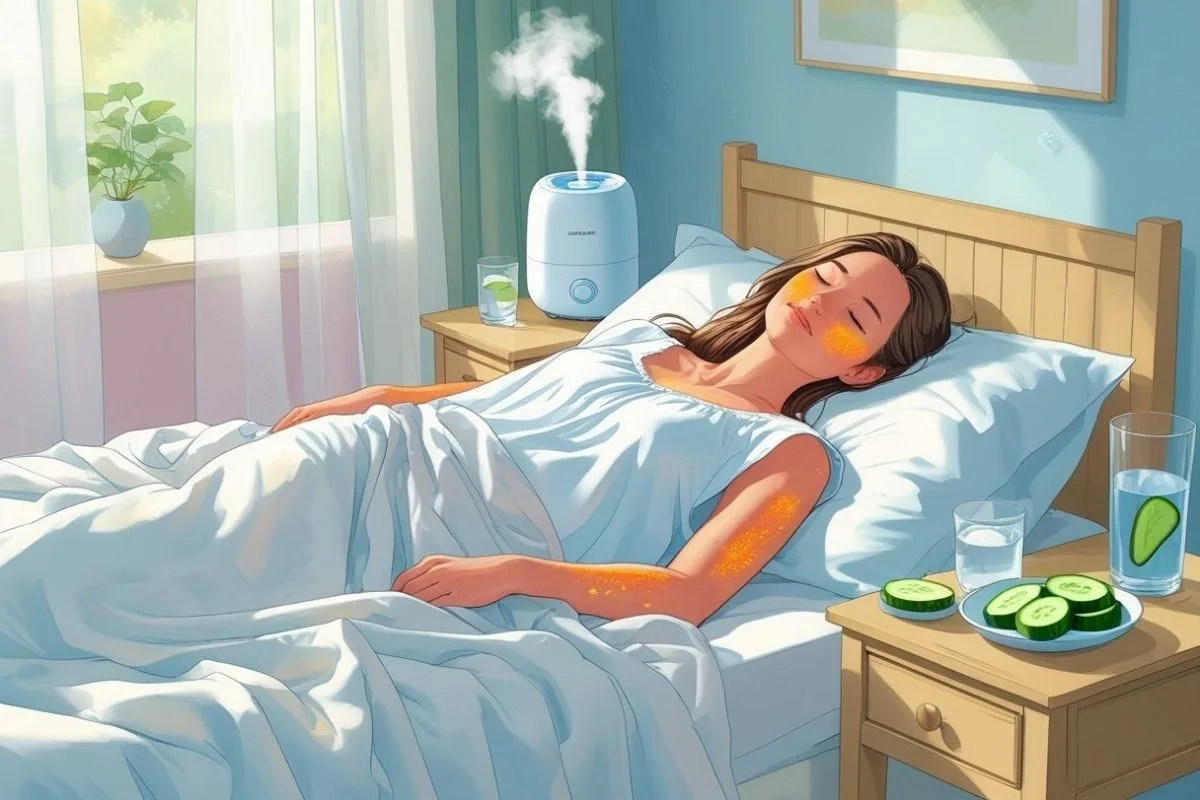
A sunburn can make nights uncomfortable and disrupt sleep. Adjusting your bedroom setup can help calm the skin and speed up healing. Small changes, like keeping the room cool, picking the right bedding and clothes, and staying hydrated, can ease irritation and help you rest better.
Creating a Cool Sleep Environment
A cooler room helps reduce pain from sunburn. Setting the air conditioner to around 68°F can calm the skin and stop sweat from making things worse. If you don’t have AC, a fan or air purifier can keep air moving without drying out your skin. Skip thick blankets or heavy comforters that trap heat. A cool space helps your body relax and recover while you sleep.
Choosing the Right Bedding and Sleepwear
Soft, breathable bedding matters when your skin is sensitive. Cotton or silk sheets are gentle and allow airflow, while synthetic fabrics can trap heat and stick to the skin. Go for loose cotton pajamas or a light sleep shirt. The goal is to protect your skin without adding pressure or friction. Light, airy fabrics help you stay comfortable through the night.
Setting Up a Hydration Station
Staying hydrated helps your skin repair itself. Keep a water bottle or electrolyte drink near your bed so you can sip before and during the night. Drinking enough water keeps your skin from drying out and supports healing from the inside. Having water close by is also a good reminder to drink, even when you’re feeling sore. Proper hydration can ease inflammation and help you sleep more peacefully.
For more ways to manage sunburn at night, learn how to set up a relaxing sleep space that supports healing.
Best Sleeping Positions for Sunburn Relief

Sleeping with sunburn takes patience and care. The goal is to avoid putting pressure on the sore areas and to help the skin heal faster. Picking the right position and using soft bedding or support pillows can ease the pain and protect the skin from more irritation. Changing how you sleep based on where the burn is helps keep you comfortable through the night.
Finding the Ideal Position for Your Burn Location
Your sleeping position should depend on where the burn is. If your shoulders or back are burned, lying on your stomach or side works better since it keeps those areas off the mattress. Lying flat on your back can press against the burns, making it more painful.
If your chest or stomach is burned, sleeping on your back is better because it allows air to reach the skin. Switching sides during the night can also help stop one spot from getting too sore. Use soft, breathable sheets like cotton or silk to avoid friction. Stay away from heavy blankets that might trap heat or stick to your skin.
Elevating Affected Areas for Reduced Swelling
Keeping the burned area raised can help ease swelling and pain. If your shoulders are sunburned, try propping yourself up with an extra pillow under your upper back or neck. This slight elevation can help with blood flow and reduce puffiness. Before bed, placing a cool, damp cloth on the burn can calm the heat and redness. Just make sure you’re comfortable and that the elevation doesn’t cause any new pressure or strain. Avoid tight wraps or bandages while you sleep so your skin can breathe and recover.
Using Pillows for Additional Support
Pillows can make a big difference in staying comfortable through the night. If your shoulders are burned, you can hug a soft pillow while lying on your side to keep your skin from touching the bed. For side or stomach sleepers, adding a pillow between your knees or under your legs helps your body stay balanced and supported. Choose soft and breathable pillows that don’t press too hard on sensitive spots. A gentle setup like this reduces rubbing and helps you rest better while your skin heals.
For more tips on sleeping comfortably with sunburn, you can read about how to sleep with sunburn.
Medications and Home Remedies for Nighttime Comfort
Managing pain and soothing the skin are key to sleeping better with a sunburn. Using the right treatments can ease discomfort and help your skin recover while you rest. Simple steps like taking safe pain relief and applying gentle creams can help you get through the night without too much pain.
Safe Use of Painkillers for Sunburn Pain
Pain relievers like ibuprofen or acetaminophen can help calm the pain and swelling from sunburn. Ibuprofen is especially useful since it targets both. It’s best to take it with food to avoid upsetting your stomach. Always follow the dosage on the label and don’t mix different medicines unless a doctor says it’s okay. These help your body manage the reaction to the burn, so you can fall asleep more easily.
Taking them soon after getting burned can keep the pain from getting worse overnight. But if the pain continues or your skin starts to blister badly, it’s better to check with a doctor to make sure there’s no deeper damage.
Recommended Over-the-Counter Solutions
Creams with aloe vera or hydrocortisone can calm irritated skin and reduce itching. Aloe vera adds moisture and cools the surface, while mild hydrocortisone cream helps control redness. Stay away from products with alcohol, fragrance, benzocaine, or lidocaine since they can sting or irritate the skin more. Avoid thick ointments that trap heat under the surface.
Don’t use sunscreen on burned skin until it heals. At night, pick a light, water-based lotion that keeps your skin hydrated without blocking pores.
Natural Remedies to Soothe Skin
Cool compresses or a quick soak in water with a bit of baking soda can lower skin temperature and bring relief. Pressing a cool, damp cloth on the burn now and then during the night helps calm heat without drying your skin. Keep drinking water through the day since sunburn pulls moisture toward the skin and leaves you dehydrated. Drinks with electrolytes can also help your body recover.
Pure aloe vera gel is another gentle option. It cools the skin and reduces irritation, making it easier to rest. Using a mix of these remedies can help ease pain, swelling, and dryness so you can sleep more comfortably, even with sunburn.
Special Considerations for Severe or Persistent Sunburn
Severe sunburn can cause intense pain and skin damage that needs careful attention. Managing such burns to sleep well requires specific steps to avoid infection and reduce discomfort.
When to Seek Medical Help
It’s best to see a doctor if the burn covers a large area, usually more than 15% of the body. You should also get help if you have strong pain, large blisters, fever, chills, or signs of dehydration. Feeling dizzy, having a rapid heartbeat, or not urinating enough are also signs that your body needs medical care.
If painkillers bought from the pharmacy don’t ease the pain, or if the condition keeps getting worse, it’s time to get professional help. A doctor might prescribe stronger medication to reduce pain or swelling, which can make resting and sleeping easier.
Protecting Blistered or Damaged Skin
Blisters need to stay intact to protect the skin underneath. Don’t pop or scratch them, since that can cause infection. You can cover them with a clean, dry bandage to keep them safe while you sleep. This also helps reduce friction from sheets or clothing. If a blister does break, wash it gently with mild soap and water. Then apply a thin layer of antibiotic ointment and cover it with a nonstick bandage. Some doctors suggest using hydrocortisone cream for pain or redness, but it’s best to use it only if your doctor says so.
Wearing loose, soft cotton clothes helps keep the skin cool and prevents rubbing against the burned area. This simple step can make sleeping with sunburn more manageable and help the skin heal faster.
Best Mattress for Sleeping Comfortably with Sunburn
Sleeping with sunburn can be rough. The heat, the stinging, and that sticky feeling against the sheets can keep you awake. Picking a mattress that stays cool helps calm the skin and reduces the burning feeling so you can rest easier. Mattresses made with gel memory foam or breathable latex allow more air to move through. This airflow keeps the surface cooler and reduces irritation. The firmness level matters too. A medium-firm mattress supports your body evenly without pressing on sore spots.
It also helps to use soft, natural sheets like cotton or bamboo. They feel smooth on the skin and don’t stick, so you can shift around without pain. When your mattress and bedding work well together, you’ll sleep more comfortably while your skin heals.
Key Mattress Features for Sunburn Comfort
- Cooling gel memory foam: keeps the mattress surface cooler and more soothing.
- Breathable latex: allows steady airflow and prevents trapped heat.
- Medium-firm support: provides structure without creating extra pressure.
- Hypoallergenic cover: reduces irritation and keeps allergens away.
If you’re looking for a mattress that supports cooling and airflow, the PlushBeds Luxury Bliss Hybrid Latex Mattress could be worth checking out. It’s made from natural latex with organic cotton and wool covers, plus fabric-encased coils that help air circulate. See more info here.
Keeping your room cool helps too. Good airflow in the space lets the mattress stay breathable and prevents heat buildup. With less trapped warmth and friction, your skin stays calmer, and you’re more likely to get a solid night’s rest.

Frequently Asked Questions
Sleeping with sunburn takes extra care to ease pain and avoid irritation. Choosing the right sleep position, managing pain properly, and using gentle fabrics can help you rest better. Cooling treatments and a few over-the-counter products can also help soothe the skin and improve comfort.